Thursday, December 13, 2018

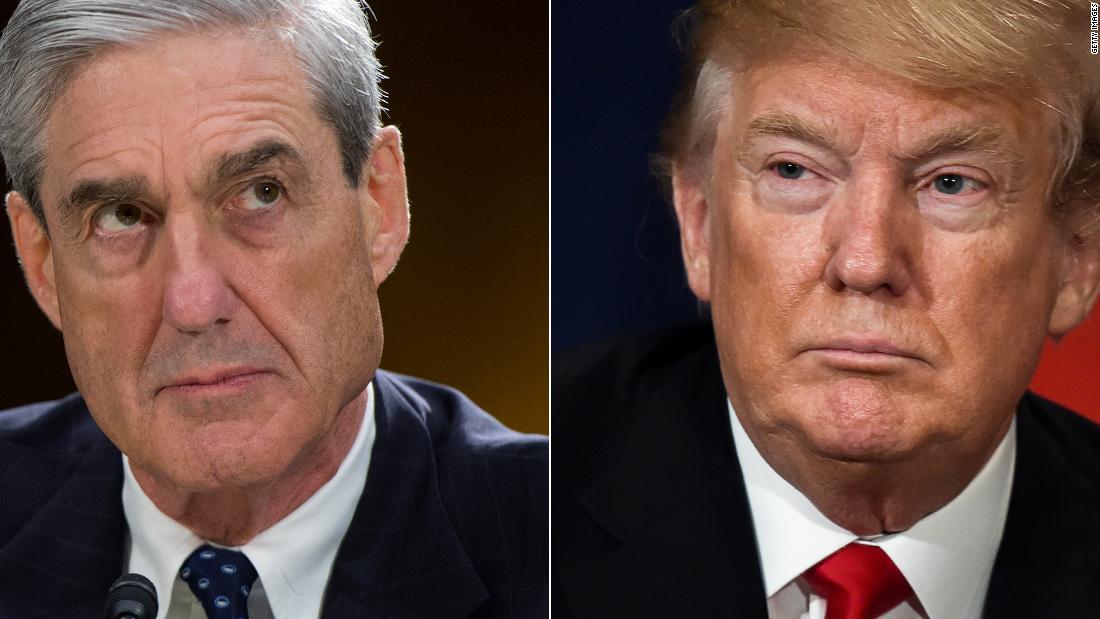
Trump’s Options Regarding the Mueller Investigation


It has long been discussed how Trump could end the ongoing Mueller investigation into whether the
president’s campaign colluded with Russian efforts to intervene in the 2016 election. It is highly
unlikely that Trump will be indicted by Mueller, since the Department of Justice has long held that
sitting presidents are immune to criminal indictment. However, as the Mueller investigation develops,
it becomes increasingly plausible that one of Trump’s actions will be deemed an impeachable offense.
Only congress has the power to prosecute Trump, and with the recent sentence of Michael Cohen to
three years in jail for election crimes, new avenues have opened for further actions against Trump.

Considering the possible implications of the Mueller investigation on Trump’s presidency: what are his
options? Trump could order Matthew G. Whitaker, the acting attorney general, to fire Robert Mueller,
or replace him with someone who would. Furthermore, Trump could order the attorney general to
re-frame the mandate of the investigation, limit its budget, and even bury the report once it lands.
However, doing so would no doubt result in a tremendous increase in disapproval rates and almost
certainly start the impeachment process. Moreover, it would require more than that to halt the
investigation.
“You’d almost have to fire everyone in the FBI and the Justice Department to derail the relevant
investigations,” said former FBI director, James B. Comey. So, it seems unlikely that Trump will
intervene. Not only would it likely destroy any hope for a reelection, it could mean that he wouldn’t
even make it to the end of his first term. In the end, guilty or not, Trump is forced to watch this
investigation play out.


  1. If an attempt to impeach Trump by House Democrats failed, which party would stand to lose more?
  2. What is your opinion on the president’s criminal immunity? (Should the president be burdened by criminal
    investigations while leading the nation, or is the current impeachment system fine and the president should remain above the law?)
  3. What effect has the Mueller investigation had on the electorate? How might this change, and how significant will the change be, if Trump actively works against the investigation?
Wednesday, December 12, 2018

The Supreme Court's Refusal to Hear Planned Parenthood Cases


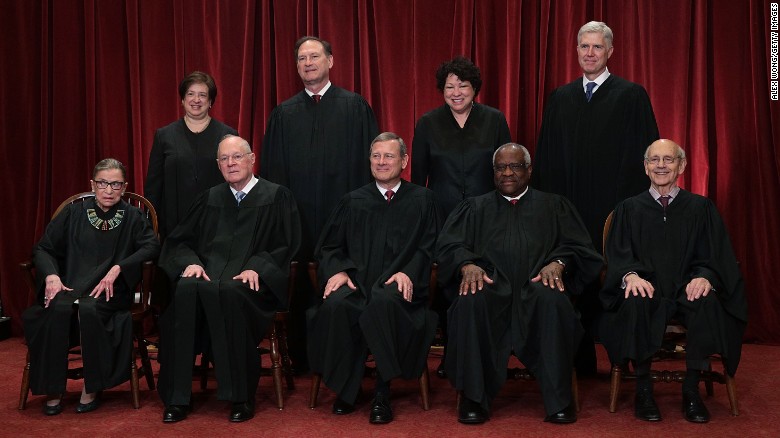
Following the unexpected death of Justice Scalia and retirement of Justice Kennedy, the Supreme Court saw a swing to the right with the additions of Justice Gorsuch and Justice Kavanaugh. Both Gorsuch and Kavanaugh are expected to be strong conservatives. According to fiverthirtyeight, Gorsuch is expected to be slightly more conservative than Justice Alito, making him as far right as Ginsburg and Sotomayor are left. Kavanaugh, on the other hand, is expected to be the second most conservative just slightly behind Justice Thomas, making him a very strong conservative. Because of this the socially liberal, especially pro choice groups, are worried that this new bench may overturn key decisions such as in Roe v Wade despite Kavanaugh claiming he "understands the importance of the precedent".

On Monday the 10th the Supreme Court declined to hear two cases related to Planned Parenthood. It was determined in appeals courts states may not revoke medicaid funding to certain programs for reasons other than healthcare quality and competence. It also determined that patients on Medicaid would be able to sue for termination of programs. Refusing to hear the cases essentially confirmed these decisions and is viewed as a win for Planned Parenthood and its supporters, and a shock for many. On a bench with five conservative judges in Roberts, Alito, Gorsuch, Kavanaugh, and Thomas, it should have been easy for the Supreme Court to get the rule of four necessary for a writ of certiorari. However, in a twist Kavanaugh and Roberts voted no and only three yes votes were passed by Alito, Gorsuch, and Thomas.

The decision to vote no by Kavanaugh and Roberts are being questioned constantly. Some claim they voted no simply to keep a low profile after Kavanaugh's messy hearing, while some believe that it is a sign that Kavanaugh is not as conservative as he seemed. Justice Thomas publicly criticized and questioned the decision to not hear the case by Justice Kavanaugh and Roberts. In his dissent, Thomas asked "What explains the court’s refusal to do its job here? I suspect it has something to do with the fact that some respondents in these cases are named ‘Planned Parenthood.’” 

Questions:
1. Why do you think Kavanaugh and Roberts voted against hearing it? Was it purely political, or was their vote genuine?
2. Is this truly a win for Planned Parenthood and a sign of the future, or are they doomed in the near future anyway due to this conservative Supreme Court Bench?
3. What do you think about the decision not to hear this case? Was it the right call?

https://www.nytimes.com/2018/12/10/us/politics/planned-parenthood-supreme-court.html
https://fivethirtyeight.com/features/how-conservative-is-brett-kavanaugh/

Monday, December 10, 2018

The Supreme Court of the US picks up a new case, Gamble v. US


WASHINGTON DC, December 10 - The United States Supreme Court accepted to hear a new case, Gamble v. United States. Terrence Gamble is a convicted felon in Alabama. He was pulled over because of a broken taillight. Once the police officer sensed there was marijuana in the car, he had a reason to get in and search Gamble’s car legally. The officer was able to find a firearm, meaning that Gamble broke both Alabama state law and US federal law. Both the federal and state law prohibits any convicted felon from possessing a firearm. This meant that Gamble was subjected to the conviction of two separate sovereigns, the US and the state of Alabama. Typically, Gamble would be protected by the Double Jeopardy Clause in the 5th Amendment which bars a second prosecution for the same offense. Although, in a precedent made by the Supreme Court Case Abbate v. United States, there is an exception to the double jeopardy rule; this execution lies in the case where the two prosecutors are “separate sovereigns” like the United States and Alabama. Therefore, if a decision were made in line with this precedent, Gamble would be tried for the same crime twice, both on the state and federal level. Luckily for him, however, it seems like the Court is willing to revisit the “separate sovereigns” exception. 

1. Should the Court overrule the “separate sovereigns” exception to the Double Jeopardy Clause of the 5th Amendment?

2. In what cases has the “separate sovereigns” rule benefitted the outcome of a trial?

3. The outcome of this case may have a direct implication on how Trump is prosecuted, if he ever is, by both state and federal parties. Will this case morph into a political issue because of it?

Wisconsin Votes to Limit Power of New Governor

Image result for tony evers


With only a month remaining for Scott Walker, Wisconsin legislators have voted to limit the power given
to the governor. In November, a Democrat, Tony Evers, defeated the incumbent and Republican
candidate, Scott Walker for the position as governor. After being faced with the first Democratic Governor
in eight years, GOP lawmakers in the state worked overtime to try and push through new legislation
to restrict the governor’s power. They stayed overnight in a lame duck sessions passing a number of laws
creating an uproar of protests. Two years ago North Carolina did the same thing, and Democrats sued
causing uncertainty over who gets to exercise what power. It is not likely that Democrats in Wisconsin are
going to stay quiet either Many of these new laws were made with the purpose of keeping the new
governor from withdrawing GOP backed laws.

  1. Do you believe that state legislators should be able to limit the power of governors?
  2. Was it fair for these laws to be passed just because the new governor was a Democrat?
  3. Do you think we will see this happening more often because of the widening divide between the two parties in our government?

Who will Take on Trump in 2020?

2020Pool4x3
Only a month after the midterm elections, Democrats and
Republicans alike are curious as to who will take on Trump
in the 2020 presidential election. Though campaigning hasn’t
officially started yet, many high profile Democrats have taken
trips to Iowa, appeared on morning talk shows, and published
autobiographies among other indicators of a potential 2020
white house bid. A few of the front-runners include former
VP Joe Biden, CA Senator Kamala Harris, VT Senator Bernie
Sanders, MA Senator Elizabeth Warren, and Texas congressman
Beto O’Rourke, though the full list is likely to be much longer.
While many of the potential candidates haven’t even officially
announced that they plan to run, most of the front-runners have
taken many of the necessary steps to jump start a primary campaign.
Others however have either stated they are open to the option of a
White House bid or will decide on a run in the next few months. Many
polls predict Joe Biden is likely to rise above the ranks in the primaries,
as he is not only popular among white working class voters (a demographic
that voted for Trump in 2016), but his campaign would likely build a massive
war chest from big-name donors who supported Obama in his presidential
elections. Biden is less popular amongst younger voters who would likely rally
behind Sanders or O’Rourke, candidates who swing further left than Biden. As
speculation will grow around who will receive the Democratic nomination, the
question for the Democratic party this upcoming year will be: do Democrats
want to run an electable candidate with a lot of experience, or a popular
candidate who can rally the party around him/her in hopes to beat Trump in
the general?

https://fivethirtyeight.com/features/whos-behaving-like-a-2020-presidential-candidate/

Which Republicans will attempt to take on Trump in 2020?

Which candidate(s) would you choose to attempt a Trump defeat with in 2020 and why?

Wednesday, December 5, 2018

Trump's Actions at G20 displays a diversion from leadership


https://www.cnn.com/2018/12/02/opinions/trump-g20-american-exceptionalism-andelman/index.html
At this year's G20 summit, it is clear that America, under the Trump administration, has focused more on its ideas of personal freedom/benefits, rather than displaying leadership that past administrations have done at the summit. During the two days of the summit, most of Trump's meetings were canceled or avoided. However, at the summit, the Trump administration was able to explain their actions such as withdrawing from the Paris Agreement, decision to pull out of NAFTA etc. Furthermore, at the summit, Trump and China's Xi were able to talk it out, extending the implementation of tariffs for 3 months.

Questions:
1. Do you think the Trump administration made the right move to cancel or avoid Trump's meetings with other world leaders?

2. Does America's loss in its role of leadership in this summit foreshadow a potential loss of influence towards other countries?

3. Do you think that America will ever assume a leadership role again? Will America continue to act solely for themselves?

Tuesday, December 4, 2018

U.S.-China Trade Truce Gives Both Sides Political Breathing Room


President Trump and President Xi Jinping of China have put a pause to the current trade war between the U.S. and China. This agreement does little to actually resolve the differences between the two countries and is rather meant to create some political breathing room for the two Presidents. The trade war has negative impacts on both the U.S. and China as we see both economies beginning to show more weaknesses. This agreement doesn't reverse the tariffs on $250 billion in Chinese goods but only prevents the tariffs from being increased. The existing tariffs are unlikely to be removed until China has "kept its promises of wholesale structural changes." The current point of conflict is the automobile industry where the Chinese are planning to enter the American market. President Trump's stance on this issue is focused on preventing heavy job losses in the automobile industry.

1. Do you think this is a step towards repairing the relationship between the two countries or is it just a pause on the conflict?

2. Will the 90 days of trade talks result in any change being made in either country?

3. Is the American economy being protected by these tariffs or are these tariffs weakening it?